
The people of Rupakot live their lives very differently than we do. Their lives revolve around sunlight. Their homes, simple concrete structures, two or three rooms carved out of clay, or simple stone structures with thatched roofs, lack running water and have only basic electricity. Around 6 every morning the village women gather at the communal well and gossip as they fill buckets of water to fulfill the daily needs for washing, cooking, or flushing body waste down the hole of the squat toilets. When the communal tap is dry, the village women go down to the stream with a large metal jug and carry the river water back to their houses, sometimes a very far hike.
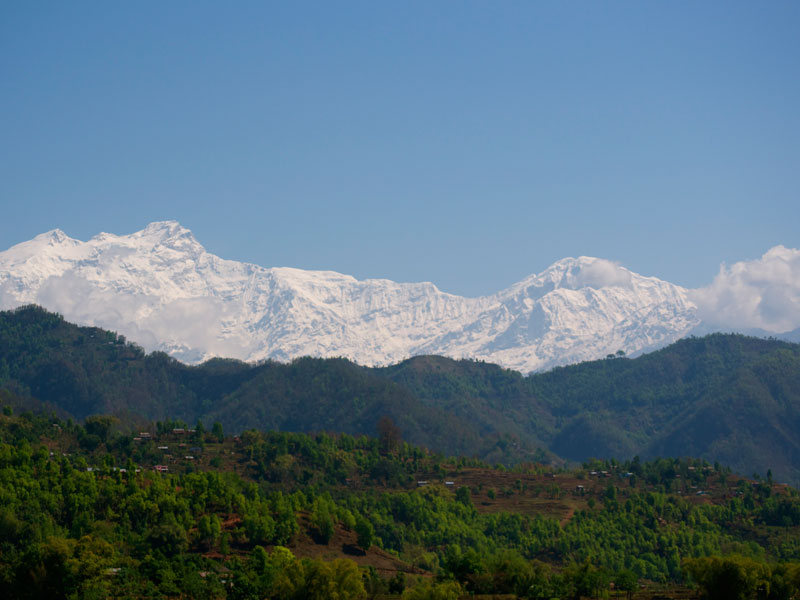
My first night in the valley was a little rough. Getting used to the power outage, the lack of a traditional bathroom, and the overall loss of modern conveniences made for a difficult first night. The next morning, however, as I woke up and stumbled out to the front room which is open to the outdoors, my mom pointed around to the back of the house. I looked and saw some of the ever present water buffalos. Unimpressed, I turned back inside, and she said “No, Gaby…up there!” Looking up into the sky peaking above the clouds rose the majestic Annapurna Mountains, a part of the Himalayan Mountain Range. They looked out of place, like someone had just dropped them there with a massive crane on the way to transporting them somewhere else. They were truly breath-taking. As the valley people say, “the decorations are free.”

View of the Annapurnas from the back of the house.
That morning we went to visit the Rupakot Health Post, the hospital associated with our NGO Avasar Nepal. As we walked up the path, a small crowd of women gathered to greet us. This was our first taste of the rich Nepali culture. Each of the ten or so women placed a red tika on our foreheads and bougainvillea leis around our necks. By the time we made it up the path to the hospital steps, the tikas covered almost our entire faces, and the red powder spread to our clothes and other areas of our bodies. It took about three days for the tikas to fully come off.

My “tika” following the Welcoming Ceremony


Recent Comments